
AI for Utility Exception Response
Help control-room and field teams assemble evidence, apply playbooks and escalate novel events while keeping operating authority with people.
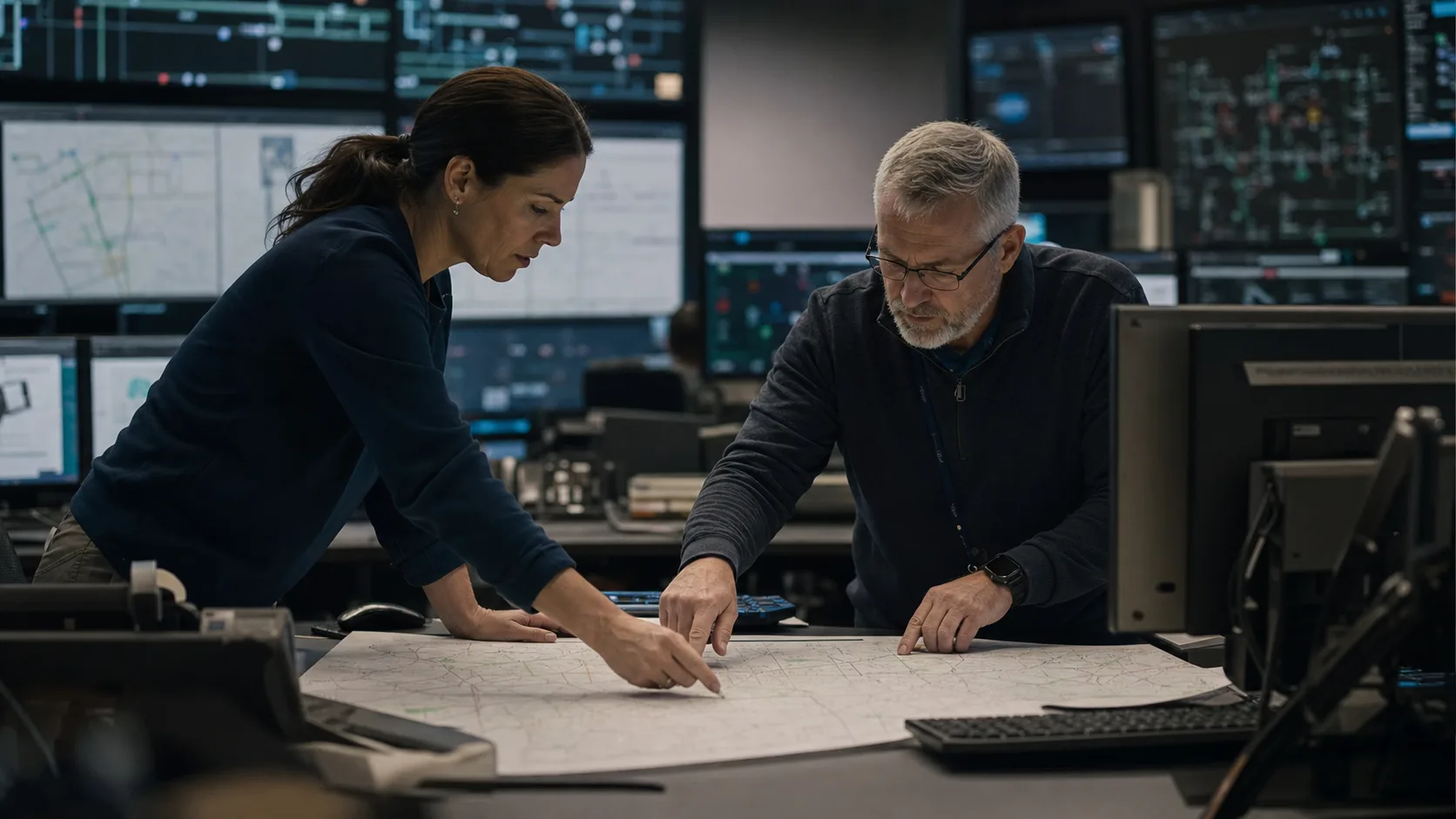

Utility operations teams already have automation. The gap appears when telemetry, work history, weather, customer reports and operating procedures must be interpreted together. During an abnormal event, people often spend scarce time reconstructing context before they can choose a safe response.
An AI worker can prepare that context. It should not receive broad authority to operate critical infrastructure. The design goal is a faster, better-evidenced handoff to the controller, dispatcher or field authority.
Pick an exception with a known owner
Suitable starting points include repeated equipment alarms, service-quality anomalies, vegetation-related risk, inspection follow-up or field-work exceptions. Avoid an initial scope where the worker would need to control equipment or make emergency decisions.
Define the event trigger, geographic and asset boundary, source systems, applicable playbooks, named decision role and maximum time window for preparation.
Correlate signals into a case
The worker can group related alarms, confirm asset identity, retrieve recent maintenance and inspection history, check active work orders, collect relevant weather or load context and locate the approved operating procedure.
Its output should answer practical questions:
- What changed and when?
- Which assets and customers may be affected?
- Which signals confirm or contradict the event?
- What known playbook applies?
- What has already been attempted?
- What remains uncertain?
Each answer should link to the underlying signal or record.
Keep action authority narrow
Reading telemetry and preparing a recommendation is different from opening a switch, dispatching a crew or notifying the public. Model these as separate capabilities. A short-lived mandate can allow a worker to query approved systems for one event while denying operational commands.
If the deployment later includes low-risk actions, define them individually with preconditions, limits and confirmation. Do not turn a successful read-only pilot into general tool access.
Design for degraded information
Real incidents include delayed telemetry, duplicate alarms and inconsistent asset identifiers. Evaluation should deliberately include those conditions. The worker must expose stale data and conflicts rather than blend them into a clean story.
Escalation conditions may include loss of authoritative telemetry, asset-identity mismatch, conflicting protection indications, public-safety impact, a novel failure pattern or any action outside the active operating procedure.
Measure the handoff
Useful measures are time to situational context, correct grouping of related events, source freshness, missed conflicts, controller corrections and time from escalation to field acknowledgement. Review near misses and unnecessary escalations separately.
A good worker reduces reconstruction work. It does not create a second control room that operators must continuously verify.
Run in advisory mode first
Replay historical events with their original data timing, not only the final clean record. Then run the worker in parallel with live operations without acting on its recommendations. Compare what it knew at each point with what the operator knew.
An OATI Mandate can express event-specific authority and expiry. An OATI Receipt can record the signals accessed, procedure used and recommendation handed to the controller. That combination supports cross-system accountability while keeping operating authority explicit.